An article about how small brands grow that we published earlier this month triggered some debate when we posted it on LinkedIn.
You can read the original piece here, but the gist is that Professor Byron Sharp, author of How Brands Grow (HBG), has reasserted that his laws of growth apply to small brands just as much as bigger ones, and dismissed as irrelevant the criticisms that the NBD-Dirichlet model assumes static markets because buying patterns are entrenched over most of the timescales that marketers consider.
Clearly, not everyone found Sharp’s arguments compelling. It’s not that his detractors believe — for the most part, anyway — that the laws set out in HBG are incorrect; they’re just not convinced these rules tell the full story or are much use to a brand looking for a first foothold in a category.
While my view is that Sharp’s theory of marketing is still the best-evidenced one that we have — and does have useful things to say about growth — I think this is a reasonable position to arrive at. HBG deals in patterns that hold across different countries and product categories, and that requires a certain level of abstraction. They can tell you the conditions that usually must be satisfied in order to achieve growth, but they cannot tell you where to look for growth. So, it’s always worth being open to alternative frameworks that help marketers find and execute a competitive advantage.
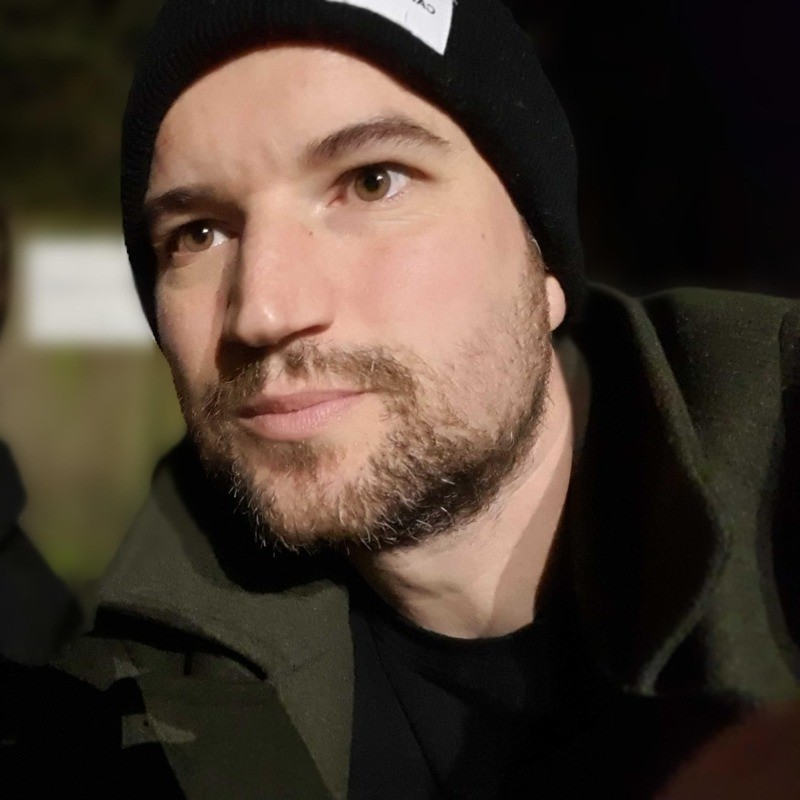
Dr Erich Joachimsthaler, the founder of brand consultancy Vivaldi and a former marketing professor, is the author of several such frameworks.
I got in touch with Joachimsthaler after he commented on my LinkedIn post about HBG. In an interview, he shared some of the methods he has used to help brands, including AB InBev and Pfizer, find growth, and explained why he thinks LLMs are upending the attention economy.
What does How Brands Grow miss about small brands and future demand?
It tries to formalise how the world works and how brands are built, and that mechanical approach is being challenged in this day and age for a lot of reasons — AI and all the technologies, and also how consumers get smarter and change.
In the Byron Sharp world, if you want to grow you need to find new buyers. But if you start a company, you already know that if you want to grow you need to get new buyers. And the mechanism of growing through broad reach is very simplistic. There's so many different ways that demand is formed and is discovered, and future demand is evolving.
Do the laws stating that the majority of a brand’s customers will be light buyers and that loyalty is a function of market share still hold?
Yes, they do. But look, what are we solving for? Are we really solving for market share gains? We know from research that market share gains are only 7% of total growth. And who has the advantage here? It's Colgate and Crest in toothpaste, and Dove in soap. I think it's the other 93% of growth we need to really worry about.
Where does that 7% figure come from?
It originally was published in 2016 by McKinsey, and then, it has been obviously validated over the years.
Where does future or new demand tend to come from, then?
Most of the future demand does not start in the category. It starts in the daily life of consumers, outside a category, most often. Especially for smaller brands, looking at what happens far beyond the category is really where you find your opportunities.
How do brands capture that demand?
I have a whole methodology; I call it the growth diagnostic sequence. It's a set of steps of how you systematically look beyond your category. One of the things that we do is we map a demand landscape. We map the daily life of consumers in a systematic way. We use a methodology called episode reconstruction, where we ask people about a particular episode that happened. So, ‘last night I was watching a game with my wife, etc.’ It's a reconstruction of a particular moment, and by stringing them together, we discover what we call demand spaces — opportunities to solve a problem in a particular context.
Are there any brands that exemplify this approach?
Rhode Skin [the brand created by Hailey Bieber]. Rhode came out four years ago with a set of three products that actually cuts instead of [lengthening] beauty routines. It identified this as a big need, and in a few years became a $200 million brand and sold for a billion dollars. It's a good example of observing. Not in an ethnographic sense, but trying to understand the episodes and moments in the morning routine, or in the getting-ready-to-go-out routine, and finding the frustrations in those moments.
Liquid Death is another good example. The founder saw metal band members drinking these energy drinks and asked: ‘How can you drink so many? Aren’t you going to have a heart attack?’ And then band members showed him they were actually filling the cans with water.
If Mike Cessario [founder of Liquid Death] had looked at the water category entry points, or analysed positionings, he would have never come up with the insight that band members wanted the identity of beer-and-energy drink culture but also wanted a functional need — namely, healthy drinking water. So, the demand was not formed within the category of water and finding more salience or mental availability. They created a new demand space.
Michelob Ultra is the same thing. It's the bestselling beer brand in the United States right now. It developed the demand space for athletic expression [in beer drinking]. Ten years ago, you would have hands down chosen Bud Light [which is sold by the same company, AB InBev] as the opportunity for that space.
Once you've identified this demand, how do you then go about promoting the product? One of the things that people regularly ask about How Brands Grow is, what do you do when you don’t have enough money to reach large audiences?
Yeah, we think we need to get reach, to buy mental availability, but actually that's not how it works. That's how it worked in the attention economy. It's actually quite different now. We live in what I call the intent economy, and in the intent economy, it's not about awareness or salience or mental availability, it is about being discovered because today the [AI] agents actually discover you. Obviously there is always a role for attention and for the media, but I think that role is changing now.
To what degree is it changing? Presumably this only applies when people are using LLMs, and the fundamentals will still apply the rest of the time?
Absolutely. Mental availability and physical availability don't go away. But since the 1960s, the dominant paradigm of marketing has been that attention gets you to consumers, builds a brand and gets you more buyers, and that's it. And I think that now it works differently because you need consumers to discover you by expressing their intention. Then you need to be chosen. Then you need to deliver on that for which you have been chosen. Then you learn how you serve that person, and it becomes a loop, and that gets you into physical availability and mental availability.
For small brands, it's actually much more practical because it isn't necessarily associated with more media spend.
How much do we know about how brands get discovered by these engines? And to what extent will brands always be at the whim of the algorithm, like we’ve seen with publishers and social media over the past decade?
In the attention economy the power was shifting to the platforms. Where we are right now, in the intent economy, there is a lot we can do still to manage or influence the algorithms.
So, you don't have to reach so many consumers, you need to influence agents, and you influence them in a number of ways. Being first with a demand space, like with Rhode, you can actually shape the decision criteria that are being used to present you first, and that's, financially, a much more attractive proposition than spending money on the platforms.
By its nature, does the intent economy support fewer brands?
I actually think it's the opposite because in the attention economy we basically dealt with a set of attributes that made [brands] different, or with a distinctive brand asset. In the intent economy, it's different. You position on the problem that you are solving for consumers, and there are many, many more problems.
Is there anything else you’d like to say on the subject that I haven’t asked about?
The point that I think matters is we as marketers always question our relevance. Some people say branding is dead, or we say the tenure of marketers is reducing, or say marketing really doesn't get the same respect from the C-suite as other disciplines.
Once I went to a board meeting and they gave me an hour at the end to give a speech. I walked in and there were all these people there, and when they saw me smiling, they started smiling. So, I said, ‘what made you smile when I came in? Do I look like a clown?’
To them, it was sort of a relief from the day’s discussion about compensation and profit or whatever.
And that was the world that we lived in for a long time. Marketing was like a blessing in the conversation, in the whole scheme of things. And I think we as marketers need to ask ourselves, do we want to become known for just putting money in media advertising and then creating broad reach, and then my biggest lesson is penetration? ‘You want to grow the company? Get more buyers!’ I think that board meeting is a short conversation.
Penetration is very important but it's not just about category. We need to think beyond categories, beyond brands and beyond media advertising.
We need to stop thinking about the category — because that's a steady state already — and start thinking before the category. That's what my demand space is doing. How do we create real demand spaces where we can have a structural position and really make money?
--------------------------------
Looking for a new agency? DCA cuts through the noise to connect brands with agencies that fit
- We cover all types of projects and disciplines, from strategy and creative to performance and tech.
- Our editorial team vets every agency, so you skip the pitch theatre and get straight to capable partners.
- We offer consultancy, pitch management, or a complimentary shortlisting service if that's all you need. Submit a brief today