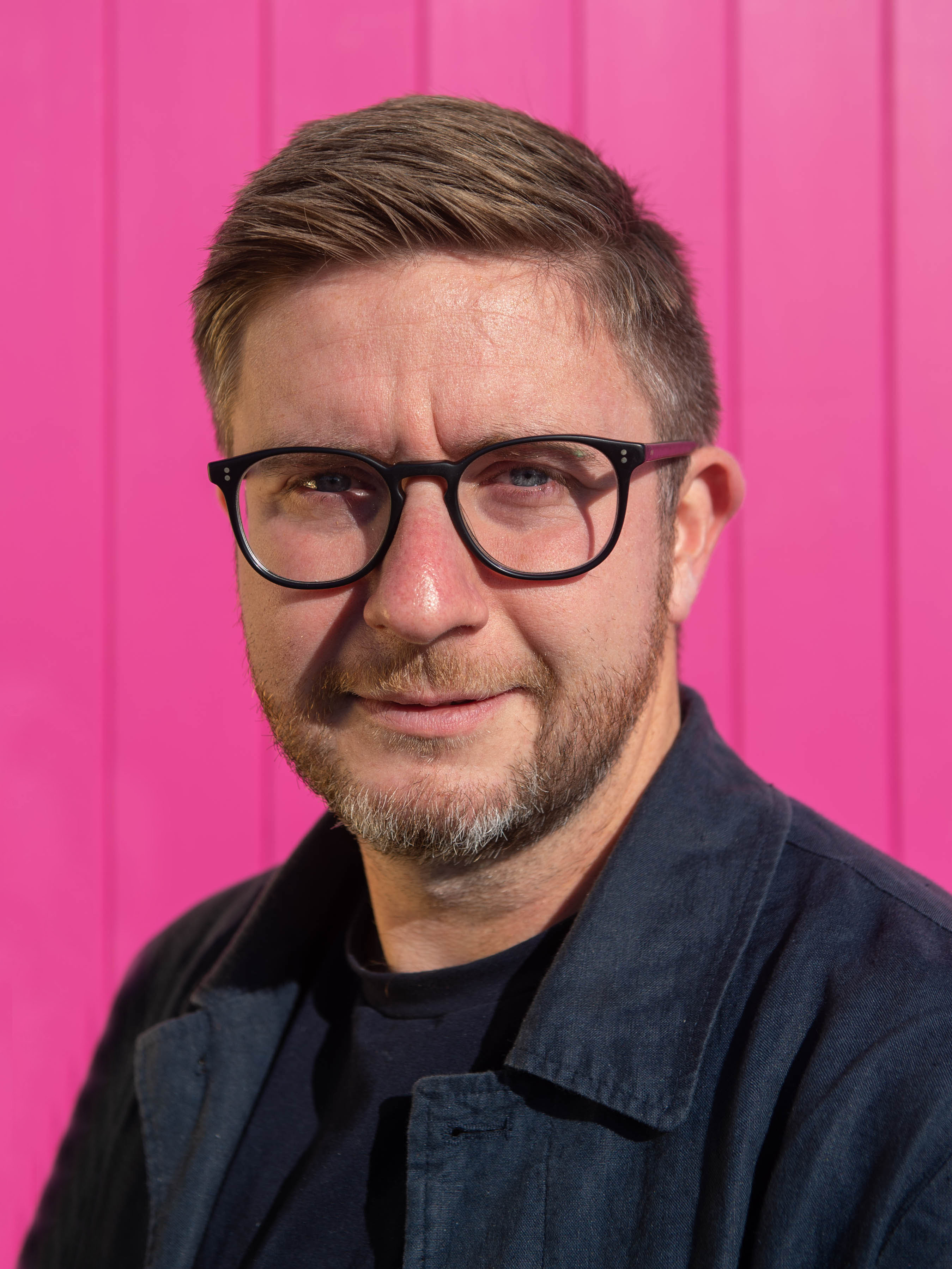

"I genuinely love what I do, more than I’d like to admit," Sam Fenton-Elstone says, recalling the six months he spent travelling the world after finally proposing to his now-wife. "I can't play the guitar. I can't do anything like that. But I love what I do."
That year-long honeymoon became an unexpected catalyst. Not for self-discovery in the traditional sense, but for recognising a pattern of self-imposed limitations. "We'd been making excuses for ourselves and we hadn't taken any risks," he says. "Really, it was because we were a bit scared."
Two years after returning to the UK and joining VCCP as chief digital officer, Fenton-Elstone left to launch his own agency. The name he chose wasn't clever wordplay or a founder mashup. It was a manifesto: Anything Is Possible.
When limiting beliefs become business strategy
Fenton-Elstone's frustration at VCCP stemmed from what he saw as structural inertia in larger agencies. "There was a lot of lack of transparency, lack of the right skills and the right talent that they needed to evolve. It was very traditional, focused around trading and traditional media. There was a lack of data capability, technology capability."
But the agency's name goes deeper than a reaction to legacy models. It's rooted in how children see the world before limiting beliefs take hold. "My daughter's six. She says to me, 'Daddy, I want to be Elsa. I want to be a singer. I want to be an astronaut. I want to be a builder.' The world is infinite to her," he says. "That's such a beautiful way to see the world. She’s led by possibility"
The problem, as Fenton-Elstone sees it, is that organisations inherit the same self-limiting patterns as ageing individuals. "People forget it in their 20s. Organisations themselves become stuck in this idea of limiting beliefs. We don't have enough budget. There's no way we'll get that signed off. There's no way we can make that work."
When the rest of the market operates within those constraints, he argues, a different perspective becomes an edge. "A pessimist would say their glass is half empty. An optimist would say it's half full. A possibilist just fills it up to the top."
Over nearly eight years, that mindset has translated into measurable outcomes. Analysis of Anything Is Possible's client base shows they've grown seven times faster than the UK average. "Genuinely because of this idea of possiblism," Fenton-Elstone insists. "They're not limited by how we work together. They're not limited by the channels that we use. We're focused on growing an organisation in a way that is compelling and sustainable."
The agency's work with Boundless, a 120-year-old membership organisation for public sector workers, exemplifies the approach. Facing years of declining memberships, the client worked with Anything Is Possible to evolve their proposition, creative platform and media strategy in tandem. Memberships reversed from decline to growth, and the work won an IPA Effectiveness Award.
More recently, the agency helped Shutterfly Fabulous, a window coverings brand, scale nationally while managing a complex supply challenge. "We took them into channels they hadn't done before, primarily TV. But we did it in a really controlled way so that we could move and shape demand in line with supply." The last 18 months have each been record-breaking.
Qualifying for Possiblism
Not every client is a natural fit for this philosophy. Fenton-Elstone has learned to qualify opportunities carefully, looking for what he calls "possibilist traits" in both individuals and organisations. "If you work with an organisation which is perhaps more conservative or risk averse, it's harder," he acknowledges. "Finding organisations and people that share that mindset is the surest way to get to success."
The agency has codified this approach, working with a psychology professor to build a recruitment model based on five psychographic profiles: Spark, Clarity, Uplift, Drive and Anchor.
"We made some mistakes early on," Fenton-Elstone admits. "We'd hire people from big agencies who'd worked on big brands and think, 'That's exactly what we need.' But whilst they'd done that, they didn't necessarily have the attitude or the approach that was needed because we're actually quite different. You have to be very entrepreneurial and make stuff happen."
The agency now uses this framework not only for its own hiring but also helps clients recruit and structure their marketing teams through Origin, its talent consultancy arm.
Media and creative as one discipline
Fenton-Elstone is emphatic that the agency's core strength lies in joining media and creative from the outset. "A brief that enables us to think about what story do we want to tell and where we tell it at the same time, when you get that right, the unlock on growth for organisations is bloody brilliant."
This integration has become more critical as algorithmic targeting has shifted the role of creative assets. "Creative is your new targeting. In terms of media targeting, a lot of that now is done algorithmically. You need to allow the tools to use the AI to maximise the efficiency. So in order to shape that, it's the creative assets that you use."
For businesses spending less than £20 million a year, he argues, the ROI impact is transformative. "You save on briefing costs, you save on wasted work, but more importantly, the campaign works better because it's completely integrated."
The agency has built LEAP, a proprietary platform that functions as its operating system, to support this way of working. Clients have access to their own workspace within the system, where all briefs, planning, audience data, contracts and campaign work live in one place. According to client feedback, LEAP saves between 10 and 30 hours of time managing the agency relationship.
AI as enhancement, not reduction
On the subject dominating every agency conversation, his concern is that AI is currently selling itself on cost reduction. "The danger of that is it makes things worse. The longer term is that AI enables us to do things better. It enables you to tell stories that you could never have told before."
He points to the opportunity for brands with modest budgets. "If you're a brand with a marketing budget of £100,000, you can create content you could never have dreamed of creating."
Across the agency's client base, from education and culture to fintech and retail, Fenton-Elstone sees a consistent pattern. "Every single client is being asked to do more with less. It's very rare where I've met a client who's going, 'I am swimming in cash and time and resources.'"
The pressure is compounded by technological disruption. "Many brands are seeing declining traffic from search. They built their businesses on SEO for years and suddenly they're getting traffic drops. That's terrifying because it's been like that for 10 years and now it's not."
Fenton-Elstone's ambitions for the next three years centre on quality of work rather than scale. The agency, which started in a garden shed with two people, now has 100 staff across four offices. "It keeps me up at night where I worry about just creating a big business. I want to create a business that's fantastic."


.avif)

.jpg)

