.avif)
Welcome to 2026, where annexing countries for their resources is back on the menu, Grok is fabricating images of real people until someone complains loudly enough, and half the internet is machines pretending to be humans selling things that don't exist. The vibes are bleak. The scams are convincing. Over Christmas, someone in my family almost fell for one.
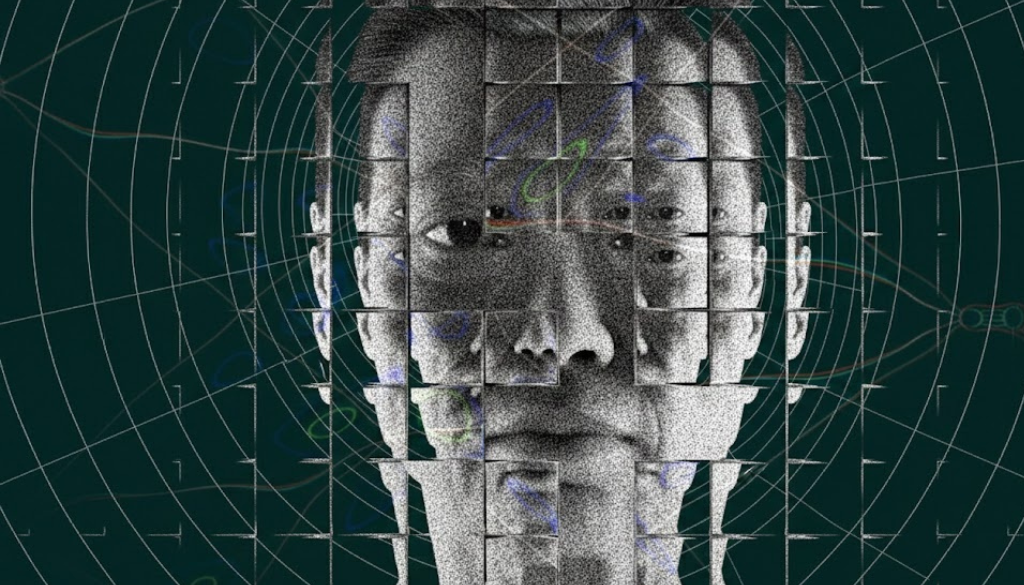
The ad appeared on Instagram: Dr Rangan Chatterjee, the British GP, bestselling author, and host of Europe's most popular health podcast, endorsing a medical product. The production quality was polished. The claims were specific. The call to action was urgent. Thankfully, something felt off, and a quick search revealed Dr Chatterjee had never endorsed the product. The video was a deepfake.
The near-miss sparked a conversation that felt overdue. The conclusion was uncomfortable but unavoidable: assume everything you see online is either fake or a lie until you can verify otherwise. Not as paranoia, but as the new default setting for navigating digital life.
This conversation was happening everywhere. Adam Mosseri, CEO of Instagram, opened the year with a post acknowledging the shift directly. "For most of my life I could safely assume photographs or videos were largely accurate captures of moments that happened," he wrote. "This is clearly no longer the case and it's going to take us years to adapt." He went further, declaring that the polished aesthetic that made Instagram famous is now finished: "Unless you're under 25, you probably think of Instagram as a feed of square photos: polished makeup, skin smoothing, beautiful landscapes. That feed is dead."
The post prompted widespread commentary. Musa Tariq, whose marketing leadership roles have spanned GoFundMe, Airbnb, Ford, and Apple, offered a measured reading. Mosseri's conclusion, he noted, "isn't anything a great marketer doesn't know, but a reminder that brands who can maintain trust and signal authenticity, being real, transparent, and consistent, will stand out."
He's right. None of this is new. But 2026 feels like a tipping point. The reminder has become urgent.
The Association of National Advertisers signalled as much in December, selecting dual Marketing Words of the Year for the first time: "Agentic AI" and "Authenticity." The pairing captures the tension now defining the profession. One word represents the tools reshaping how marketing gets made. The other represents what those tools are systematically eroding.
For marketers, there are two dimensions to consider. The first is how AI is changing the work itself, the watch-outs when using these tools for media buying, creative production, and distribution. The second is harder to control: how AI is transforming the internet environment in which brands operate. Both demand attention.
The numbers on the second dimension are stark. Research from Raptive found that trust in content drops nearly 50% when consumers suspect AI generation, regardless of whether content is actually synthetic. A phenomenon researchers call the "AI stink" now threatens brand value and advertising effectiveness alike. Meanwhile, forecasters suggest up to 90% of web content may be AI-generated by the end of 2026. The environment brands show up in is changing beneath their feet.
The industry appears to be misreading the room. An IAB study released this week found that 82% of advertising executives believe younger consumers feel positively about AI-generated ads. The actual figure is 45%. That perception gap has widened since last year, not narrowed.
Ben Liebmann, founder of Understory, a boutique advisory specialising in media, entertainment, and marketing, offered a sharper reading of Mosseri's post. "This isn't a mystery of modern life," he wrote. "It's the result of a very specific set of choices made by very specific companies, including the one Mosseri runs."
His critique cuts to the heart of the matter. Instagram built a system that rewards whatever triggers the fastest emotional response. Accuracy is slow. Context is boring. Outrage, beauty, fear, and novelty move the needle. The platform trained people to trust the feed, broke that trust at scale, and is now suggesting users recalibrate their expectations.
"Our discomfort is the product," Liebmann concluded. "Our confusion is the engagement."
There's a flaw in Mosseri's logic. He positions imperfection as a defence against synthetic content, suggesting that blurry photos and shaky videos will signal authenticity. But generative AI doesn't distinguish between aesthetics. It learns whatever it's fed. The viral AI images that fool people today aren't the glossy, overproduced ones. They're the grainy shots that look like someone took them on their phone at a party. If lo-fi becomes the trust signal, it becomes the thing AI learns to produce. The aesthetic arms race has no finish line.
The scale of the problem has reached crisis proportions. Deloitte projects AI-enabled fraud losses will hit $40 billion by 2027, up from $12.3 billion in 2023. Medical professionals and celebrities have become primary targets, their likenesses manipulated to sell fake treatments and fraudulent investments. Platform enforcement remains patchy. Meta's policies allow advertisers up to 32 strikes for financial fraud before account bans, prompting 42 state attorneys general to demand action on investment scam ads in a letter sent last June.
For brands, the implications go beyond avoiding fraud. There's the question of what your advertising appears alongside in feeds increasingly dominated by synthetic content. And there's a deeper challenge Tariq identified: as brands adopt the same AI tools for media buying, creative production, and distribution, the tools themselves become commoditised. Knowing how your business grows, who you grow with, and who you are at your core will matter most when prompting AI, just as these fundamentals matter when briefing an agency partner. If everyone uses the same tools in the same way, strategy and brand become the differentiators.
Samir Chaudry, creator economy expert and co-founder of the Colin & Samir Show, frames it as an abundance crisis. "Demand has never been higher. Blue-chip brands are finally here. Audiences are spending more time than ever on platforms. But supply has exploded. And not just the supply of creators, the supply of good creators and good content."
His conclusion applies equally to brands: when both supply and demand are high, the scarce resource becomes curation. Who should audiences care about? Who is actually influential? Who is doing something different? "Viewership and reach won't be the differentiators of the abundance era," Chaudry writes. "Narrative and brand will be."
Some brands are already placing explicit bets on authenticity. Polaroid's "The Camera for an Analog Life" campaign, created entirely by their in-house creative studio, placed OOH directly outside Apple Stores and Google offices in New York and London with lines like "AI can't generate sand between your toes" and "No one on their deathbed ever said: I wish I'd spent more time on my phone." Underwear brand Aerie's October 2025 Instagram post pledging not to use AI-generated bodies became their most-liked post of the year. iHeartMedia launched a "Guaranteed Human" campaign after research found 90% of listeners want media created by humans, explicitly promising no AI-generated personalities or music.
The broader implication is that human creativity becomes the differentiator in an AI-saturated landscape. Research from Kantar found creator-led content outperforms benchmarks by more than 480% on brand distinction. Meanwhile, attention to social media advertising has collapsed. Only 31% of people worldwide say social media ads capture their attention, down from 43% in 2024.
Perhaps the smarter bet runs in the opposite direction. Instead of competing on casualness, some creators and brands are doubling down on deliberate craft. What AI struggles to replicate isn't a visual style but the evidence of genuine creative intent: an idea that required real thought, a perspective that emerges from lived experience, production choices that reflect a specific creative vision. Equipment matters less than the ambition behind its use. A distinctive point of view is harder to synthesise than any filter or frame rate.
This explains the growing appeal of long-form video. Time is the enemy of AI-generated content. Short clips are easier to produce convincingly because there's less opportunity for errors to accumulate. Sustained content remains significantly harder to fake. YouTube has leaned into this advantage, with a July 2025 update requiring videos to be "original and authentic" for monetisation eligibility, explicitly demonetising AI-generated narration over stock footage. Advertisers have responded: a Pixability study found 81% of US agencies expect YouTube spending to stay steady or increase this year.
For brands, the opportunity is clear. Investing in genuine, owned video content builds assets that are harder to replicate and easier to verify. Agencies and production partners who can deliver this work become more valuable precisely because the floor has dropped out beneath commodity content.
The economics of trust have inverted. Synthetic content is cheap and abundant. Authentic human creativity is scarce and valuable. Brands that invest in demonstrable authenticity, whether through long-form video, behind-the-scenes transparency, or simply letting real people tell real stories, may find competitive advantage precisely where AI cannot easily follow.
Amar Chohan, Founder and CEO - Department of Creative Affairs.
Looking for a new agency? DCA cuts through the noise to connect brands with agencies that fit
- We cover all types of projects and disciplines, from strategy and creative to performance and tech.
- Our editorial team vets every agency, so you skip the pitch theatre and get straight to capable partners.
- We offer consultancy, pitch management, or a complimentary shortlisting service if that's all you need. Submit a brief today


.jpg)
