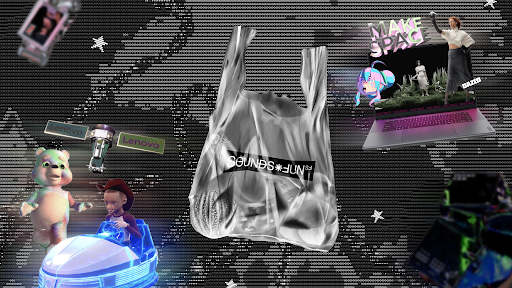

'We will never go into a room to sell something,' says Iain Thomas, chief innovation officer and co-founder of Sounds Fun. 'We're always there to hear the client, understand what they're trying to do, and work with them.'
It's a philosophy that shapes how the agency works day to day, from how it runs presentations to how it develops strategy and KPIs with clients rather than for them.
The New York-based consumer experience agency was founded by Thomas alongside Isabel Muñoz, Martin Magner and Alex Gangi. All four had worked together previously and liked the combination enough to formalise it. 'We each brought something really unique to a team, and we complemented each other in exceptional ways,' Thomas explains. 'It just made sense to try and put lightning in a bottle.'
At the heart of the agency is a simple conviction: experiences change minds more powerfully than ads. 'People change their minds when they experience something,' Thomas says. 'An experience is so much more powerful than an ad.'
No big reveals
Most agencies treat presentations like product launches. Work is revealed, feedback is collected and revisions happen behind closed doors. Sounds Fun takes a more collaborative approach.
'We're one of the few agencies that's not afraid to brainstorm with the client in the room,' Thomas says. 'If there's an easy solve to make the work as good as it can possibly be, we're happy to sit with you and figure it out right then and there.'
Muñoz describes the process as deliberately transparent. 'We bring clients into our process. They see how the work is transforming along the way, so we stay in line with each other rather than going off to an island for three weeks and coming back with something wrong.'
That extends from creative development into strategy, KPIs and direction. Nothing is treated as untouchable. 'What we present is not set in stone,' Muñoz says. 'It's meant to be workshopped and refined along with the client.'
Hiring for who people are outside work
Thomas is a bestselling author. Magner is a performing artist. Across the wider team, people climb mountains, study ballet, obsess over club culture and present hour-long deep dives on the cultural significance of Bad Bunny concerts in Puerto Rico.
'We are founded and informed by this idea that we should all be things outside of advertising and marketing,' Thomas says. 'The best ideas come from that space.'
Sounds Fun hires for it. The team actively seeks people with interests beyond the industry, believing creativity often comes from connecting seemingly unrelated worlds. A technique from rock climbing might inspire a design language. A movement from ballet could unlock an activation experience.
Internally, the team holds sessions where people present on subjects ranging from crochet and pigeons to internet culture. 'We create space for people to share who they are,' Muñoz says. 'When people are comfortable and feel safe, it helps their work and their creativity.'
Making space for young creatives and AI
That cultural fluency became particularly useful when Lenovo approached Sounds Fun to launch a range of AI-enabled laptops aimed at young creatives. Rather than focusing solely on the technology, the agency considered the anxiety surrounding AI itself.
'Young people are very concerned about AI,' Thomas says. 'So we said, let's build a platform that literally makes space for young creative people. Let's give them a voice in this conversation that's dominated by giant technology companies.'
The result was Make Space, a platform designed to involve young creatives in the conversation around AI rather than simply market the technology to them. Sounds Fun partnered with Dazed on workshops, worked with fashion designer Nicola Formichetti on a fashion show from the future, and created magazines, installations and events.
'AI should mean more creative opportunities for young people, not less,' Thomas says.
For Muñoz, Make Space demonstrates the range the agency can operate across. 'We were allowed to create this platform with so many legs. It has spanned from a messaging platform to IRL events to digital experiences.'
Building culture without an office
Running a fully remote agency gives Sounds Fun access to talent around the world, but it means the informal moments that build trust between colleagues have to be engineered. The agency creates structured opportunities for connection through presentations, regular check-ins and spaces for people to share their interests.
That same intentionality informs its growth. 'When you come into an existing agency, you plug in where you can,' Muñoz says. 'But when you're building something from scratch, there's something really special and intentional that has to happen so it can grow beyond the four founders.'
Thomas sees psychological safety as essential to the creative process. 'The boldest, most daring work comes from a place of trust. Creativity comes from safety. It comes from feeling open and connected to the people around you.'
Where Sounds Fun works best
Sounds Fun can execute against a specific brief, but Thomas says the agency is strongest when brought on as a strategic partner. 'We pull in our expertise, outside relationships, everything together to give people a really clear picture of what's possible.'
Muñoz says the agency responds particularly well when a client arrives with a broad challenge and allows the team to determine the best answer. They're also drawn to businesses willing to question familiar approaches. 'We're quite interested when a client has something the business has done a thousand times before and they just want a pair of eyes to say, "How else could we do this?"' Thomas says.
For both founders, one of the clearest measures of success is when clients start discussing the next project before the current one has even launched.
'When you're at the event, sharing what you've just made, and the client is talking about the next project and what else this could be, that's always the biggest key indicator of success,' Thomas says.
Looking beyond the agency model
The founders came from an agency within a wider media company encompassing magazines, television and other cultural touchpoints. Now, they're beginning to ask how far Sounds Fun itself could stretch.
'We are so fundamentally invested in culture and what's possible,' Thomas says. 'There's a way for us to look at what we do and go, how many other things can we be and what can we learn from that?'
A record label is already in discussion, while Sounds Fun merchandise offers another small step beyond traditional agency work. For Thomas, these ventures are as much about learning as expansion.
'If we have a record label, what do we learn about music and fandom and the recording industry? If we start a fashion brand, what do we learn about selling a product for ourselves?'
Muñoz's ambitions centre on growing the agency's profile while protecting what makes it distinct. 'I'm excited for more people to get to know Sounds Fun, to see our work, to want to work with us.'
For Sounds Fun, growth isn't simply about becoming a bigger agency. It's about widening the definition of what the business can be while maintaining the collaborative, culturally curious approach it was built around.
'Expanding across culture, expanding the idea of what Sounds Fun is and could be, I think is really exciting,' Thomas says. 'We want to drive change, and that lets us do it in a really powerful way.'